
UniSeal hollow fibre MBR membrane
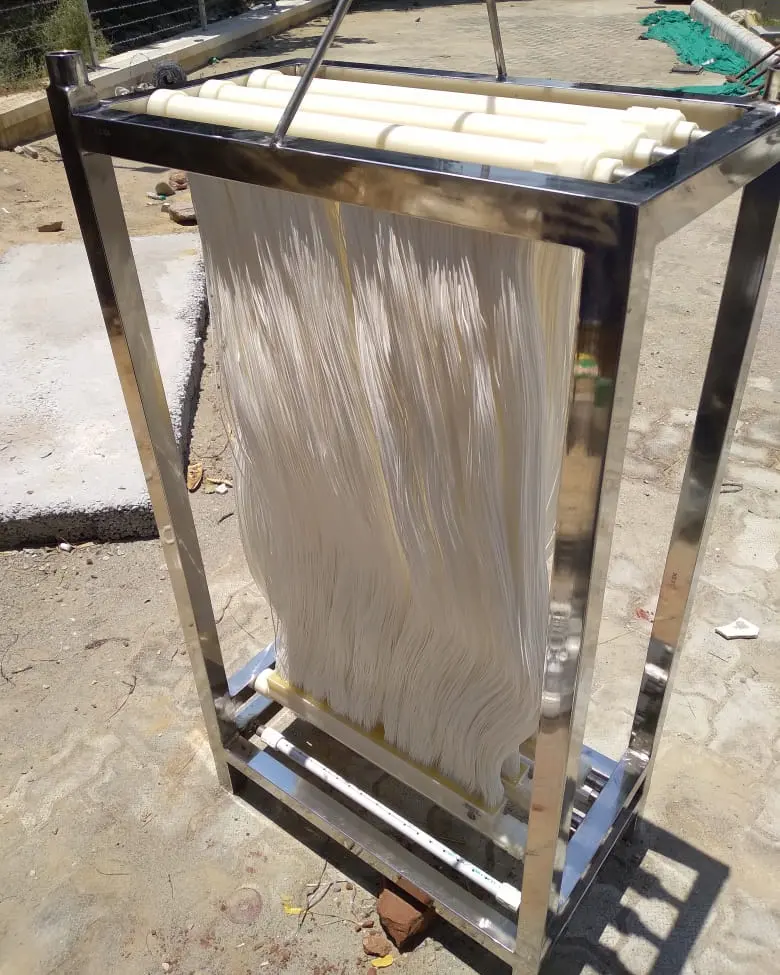
Imported reinforced PVDF hollow fibre membrane elements for submerged membrane bioreactors, in three sizes.
- Models
- UniSeal-100, 200, 300
- Membrane area
- 10 / 20 / 30 m²
- Material
- R-PVDF
- Filtration
- Outside-to-inside
- Permeate flux
- 10–30 LMH
- Origin
- Imported
How UniSeal works in the plant
UniSeal elements use reinforced PVDF hollow fibres as the separation stage of an activated sludge process, replacing secondary clarification and tertiary filtration with a single physical barrier.
The reinforced fibre construction is intended for continuous operation under the mechanical loading of aeration scour and routine chemical cleaning. Cleaning in place can be carried out offline or online.
Applications
- Sewage treatment and water reuse schemes
- Industrial wastewater treatment plants
- Commercial and residential sewage treatment
- Retrofit of conventional activated sludge plants
- Capacity upgrades within an existing tank footprint
- Treated effluent polishing ahead of RO reuse
Technical data
| Parameter | UniSeal-100 | UniSeal-200 | UniSeal-300 |
|---|---|---|---|
| Membrane area (m²) | 10 | 20 | 30 |
| Membrane material | R-PVDF | ||
| Membrane type | Outside-to-inside | ||
| Fibre size, O/I diameter | 2.0 / 0.9 mm | ||
| Pore size | 0.1 µm – 0.06 µm | ||
| Permeate flux | 10–30 LMH | ||
| Operating pressure | −2.95 to −17.71 inHg | ||
| Operating temperature | 10–40 °C | ||
| Element dimensions (mm) | 1000 × 534 × 46 | 2000 × 534 × 46 | 2000 × 750 × 46 |
| Backwash flux | 15–45 LMH | ||
| Turbidity, inlet | <100–200 NTU | ||
| Turbidity, outlet | <3–1 NTU | ||
| NaClO tolerance | 2000 ppm | ||
| Element water collecting header | ABS resin | ||
| CIP process | Offline / online | ||
Questions buyers ask
What is the difference between UniSeal-100, 200 and 300?
Membrane area and element size. UniSeal-100 has 10 m² in a 1000 × 534 × 46 mm element, UniSeal-200 has 20 m² in 2000 × 534 × 46 mm, and UniSeal-300 has 30 m² in 2000 × 750 × 46 mm. Material, fibre size, pore size and operating limits are the same for all three.
Can UniSeal elements replace the membranes in my existing MBR plant?
Often, but it depends on the existing frame and connections. Send the make and model of your current membranes, the element dimensions, the number of modules and photos of the frame and header connections. We will tell you whether UniSeal elements fit the existing frame or a new frame is needed.
How are UniSeal membranes cleaned?
By cleaning in place (CIP), offline or online. The elements tolerate sodium hypochlorite (NaClO) up to 2000 ppm, as stated on the spec sheet. Cleaning frequency and chemicals depend on the plant and are agreed at selection.
Are the membranes supplied with a frame?
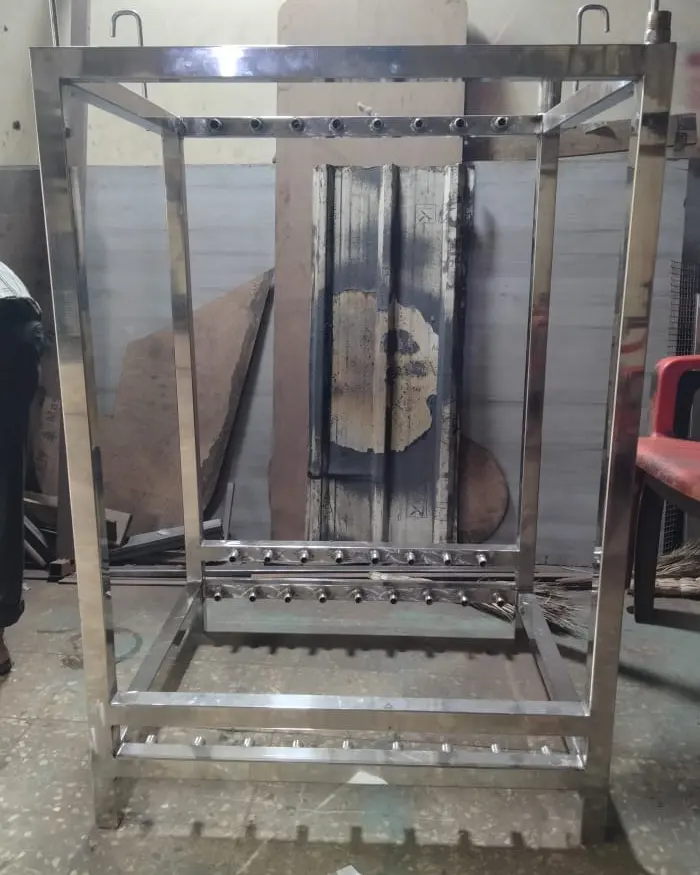
Either way. Elements can be supplied loose, or mounted in a stainless steel frame with permeate and air headers. Mention your preference in the enquiry.
Also needed for an MBR plant
Quotation for UniSeal
Tell us the model, quantity and plant capacity, or send the existing membrane details for a replacement.